Wedding Reception Sound Design: Beyond Music in Sioux Falls
When couples plan a wedding reception in Sioux Falls, the conversation usually starts with music.
What songs should we play?
What gets people dancing?
What kind of vibe are we going for?
Those are all important decisions, but they only cover part of what your reception actually sounds like. A wedding reception is a live environment. People are arriving, talking, eating, reacting, and moving throughout the night. The music sits inside all of that, but it does not control everything. Sound design is how those pieces are managed together so the night feels connected instead of broken into separate parts. It is the difference between a reception that feels smooth and one where guests are constantly trying to figure out what is happening next.
What Sound Design Looks Like in a Sioux Falls Wedding
Sound design is not about doing more. It is about making better decisions with what is already happening.
That includes what guests hear when they walk into a venue like Laurel Ridge Barn, how clearly speeches come through at a place like The District, and how the energy builds throughout the night.
We worked a Sioux Falls wedding where the couple kept saying they wanted everything to feel natural. They did not want big pauses or awkward transitions. They wanted the night to move without having to think about it.
That came down to how each phase was handled. Guests entered with music already playing at a level that felt comfortable. When dinner started, the volume adjusted slightly so conversation stayed easy. When speeches began, the room was brought in with a clear shift so guests knew to pay attention. Nothing about it felt forced, but none of it was accidental.
The First Phase of the Reception Sets Expectations
The beginning of your reception shapes how guests behave for the rest of the night, whether they realize it or not. If people walk into a room that feels quiet or unstructured, they tend to hold back. They wait, read the room, and look for cues before fully engaging. That hesitation slows everything down. We have seen this at receptions where there is no consistent sound when guests arrive. People cluster in small groups, conversations stay limited, and the room takes longer to come together because there’s nothing pulling everyone into the same shared space.
At a wedding at Monick Yards, the approach was more intentional.
As guests entered, there was already a steady, familiar sound environment. Not loud, not distracting, but enough to create a shared atmosphere and signal that something is happening.
Within minutes, people were talking, moving, grabbing drinks, and settling in. The room felt active without needing a big moment to kick things off.
That early setup removes friction, sets expectations, and makes everything that follows feel easier to step into.
Audio Clarity Impacts More Than People Expect
One of the fastest ways to lose a room is poor audio. Not just volume, but clarity and consistency from start to finish.
If guests cannot clearly hear what is happening, they stop paying attention. It becomes background noise instead of a shared moment.
We worked a wedding at Gate City Events, where the speeches had strong content, but the microphone setup was inconsistent early on. Guests tried to stay engaged, but side conversations started because people were struggling to follow along.
At another reception at Round Lake Vineyards, the setup was clean from the start. Levels were dialed in, transitions were smooth, and there was no guessing.
When the first speaker began, the room naturally quieted. Guests stayed focused without needing multiple reminders. Reactions carried across the space, and the moment felt unified instead of scattered.
The difference was not the speaker. It was the delivery. Sound design ensures that the important parts of your reception are clearly heard, properly timed, and never competing with the environment.
The Transition From Dinner to Dancing Is a Key Turning Point
Once dinner ends, the entire energy of the room needs to shift.
Guests have been sitting, eating, and talking for an extended period of time. They are comfortable, but that comfort works against you if you are trying to open a dance floor.
If there is no clear transition, people stay in that same mindset. Some head to the bar, others stay seated, and the energy spreads out instead of focusing in one place.
We have seen Sioux Falls receptions where dinner wrapped up and nothing changed. The music stayed the same, there was a gap between formalities, and guests were left without direction. The dance floor opened slowly and never fully built momentum.
At a different wedding at Laurel Ridge Barn, the transition was structured.
Toward the end of dinner, the music began to shift slightly. The tempo increased just enough to signal that something new was coming.
When the couple moved into their first dance, the room was already paying attention. There was no need to pull people in from scattered conversations.
The key detail came immediately after. There was no pause. The next song started right away, and it was something familiar enough that guests responded quickly. That sequence made it easy for guests to move from sitting to participating without hesitation. Once the first group stepped onto the dance floor, the rest followed.
Momentum Has to Be Maintained, Not Restarted
A common mistake is treating the dance floor like something that can be turned on at any moment. In reality, momentum is built over time and needs to be maintained once it starts.
We had a Sioux Falls wedding where the dance floor opened strong but began to level off after about an hour. Instead of waiting for it to drop completely, the DJ adjusted early. The pacing changed, different songs were introduced, and the energy was redirected before it could fade.
That adjustment kept people engaged without needing a full reset. Sound design is not about reacting late. It is about recognizing shifts early and managing them in real time.
The DJ’s Role Extends Beyond Music
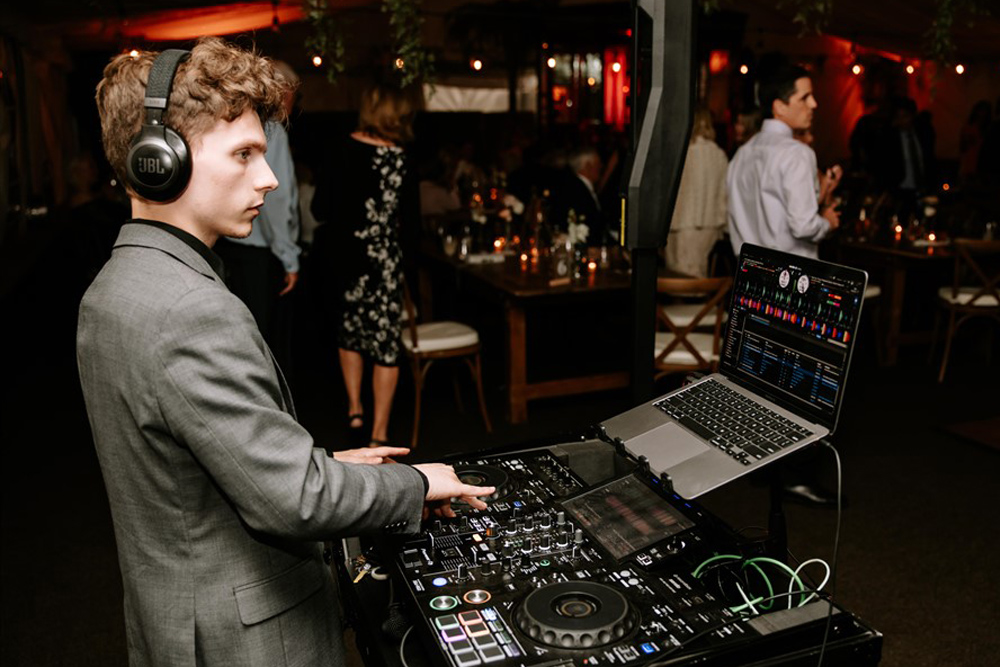
A professional wedding DJ is responsible for more than just playing songs. They are managing timing, volume, and attention throughout the night.
They decide when to step in with direction and when to let the room carry itself.
They watch how guests respond and make adjustments that keep the energy consistent.
At one Sioux Falls wedding, there was a moment where the dance floor energy dipped slightly.
The DJ shifted direction before it became noticeable to most guests. The change was subtle, but it kept people engaged and prevented the floor from clearing out.
Those small decisions shape the overall experience more than any single song choice.
How the Full Team Supports the Experience
Sound design works best when it is supported by the entire vendor team.
Your timeline needs to allow for smooth transitions.
Your coordinator needs to keep events moving at the right pace.
Your photographer and videographer need to be ready for key moments so nothing is missed.
At Complete Weddings + Events Sioux Falls, those roles are aligned.
The DJ is not operating independently. The entire team works together to keep the night connected from one phase to the next.
That coordination reduces gaps, keeps guests engaged, and allows the reception to build naturally.
Why This Matters for Your Reception
When couples look back on their wedding, they usually describe how the night felt as a whole.
They notice whether things flowed smoothly or felt disjointed.
They remember whether guests stayed engaged or drifted in and out.
They recognize whether the energy carried through the entire reception or dropped off at certain points.
Those outcomes are shaped by how well the event was structured from a sound and flow perspective.
Sound design is not something guests will point out directly, but it influences their experience the entire time they are in the room.
Need Help Getting Started?
At Complete Weddings + Events Sioux Falls, we specialize in helping couples pull together amazing weddings—no matter the timeline. Whether you need a photographer, videographer, DJ, coordinator, or photo booth (or all of the above), we’re here to make planning easier and more fun.
Reach out today and let’s start planning your six-month wedding the right way, with less stress and more excitement.