Wedding Film Versus Raw Footage: Which One?
Your first look lasts seconds. Your parent’s toast may last three minutes. Your ceremony could be 20 minutes, 40 minutes, or longer. When you are comparing wedding film versus raw footage, the real question is not simply whether you want more video. It is how you want to remember the moments you were too busy living to fully take in.
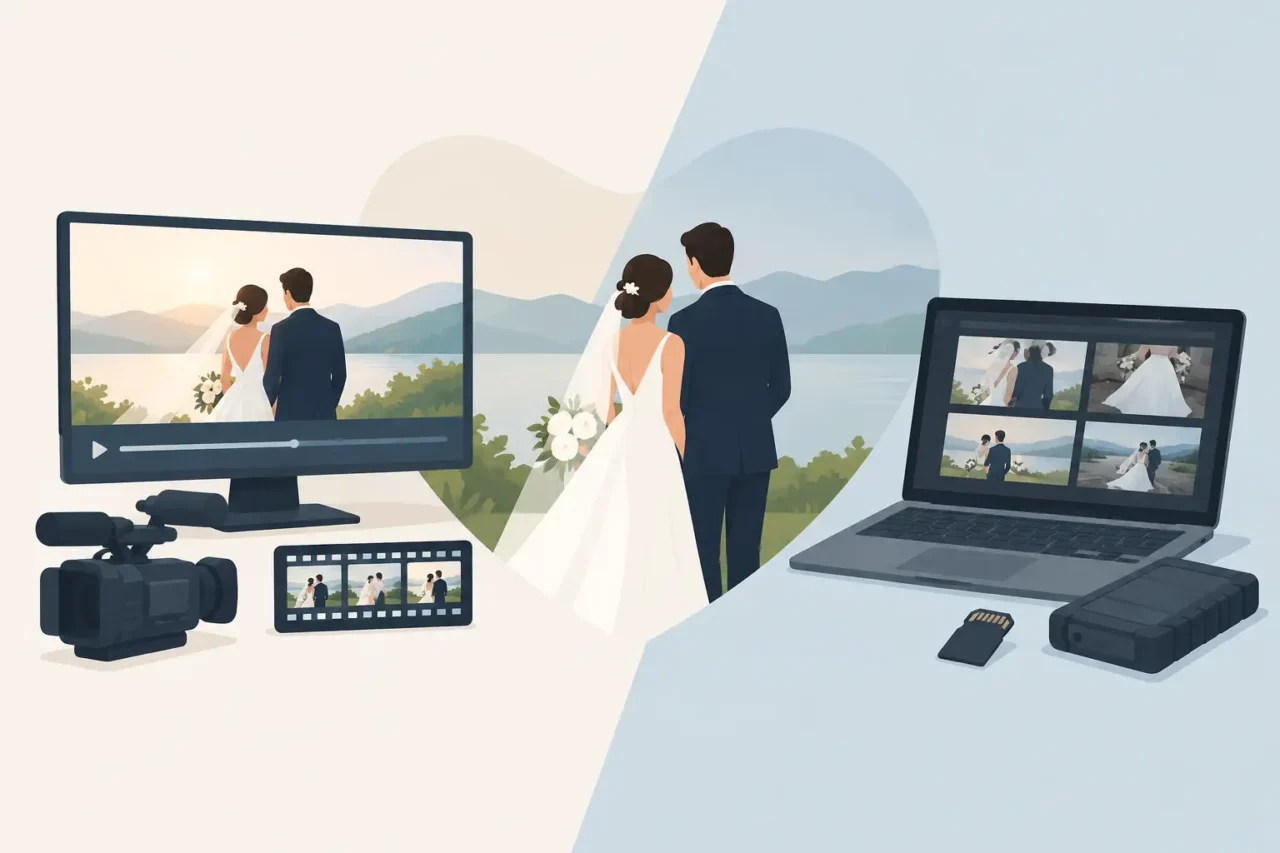
A polished wedding film and a folder of raw clips serve very different purposes. One is crafted to tell the story of your day. The other is a collection of the camera’s original recordings. Both can be valuable, but they are not interchangeable, and understanding the difference before you book can prevent disappointment later.
What Is a Wedding Film?
A wedding film is an edited video created from the best footage captured throughout your celebration. Your videographer selects meaningful moments, arranges them into a cohesive story, adjusts color and sound, and usually adds licensed music. The result is designed to feel intentional, emotional, and easy to rewatch.
Most wedding films are not meant to document every second in real time. Instead, they may include the anticipation of getting ready, a few words from your vows, the joy of the recessional, the energy of the dance floor, and the reactions that bring the day back to life. Depending on your package, you may receive a short highlight film, a longer feature film, separate ceremony and toast edits, or a combination of these.
The editing is where much of the value lives. A skilled editor can pair a parent’s voice from a toast with scenes of a first dance, remove distracting background noise, balance footage from multiple cameras, and create a natural rhythm. A great film does not just show what happened. It helps you feel why it mattered.
What Counts as Raw Footage?
Raw footage is the unedited video recorded by the cameras during your wedding day. It may include full clips from the ceremony, candid reactions, parts of the reception, and behind-the-scenes moments. It can also include camera adjustments, repeated shots, people walking in front of the lens, shaky transitions, or clips with no usable audio.
The word “raw” can mean different things from one videography team to another. Some professionals provide original camera files exactly as recorded. Others provide lightly organized, color-corrected clips or a long-form documentary edit. Before assuming raw footage includes every moment from every camera, ask for a clear explanation of what will be delivered.
Raw footage can be meaningful because it is extensive and unfiltered. You may hear the full version of a speech, see guests arriving at cocktail hour, or catch a quiet exchange that did not make the final film. Still, it generally requires patience to watch. A wedding day can produce hours of video, much of it with little context or polish.
Wedding Film Versus Raw Footage: The Key Differences
The biggest difference is purpose. A wedding film is made for watching and sharing. Raw footage is made for preserving source material.
A film gives you a finished experience. It is paced, color-balanced, and built around the moments that carry the most emotional weight. You can send it to family members, watch it on an anniversary, or revisit it when you want to remember the feeling of the day without sorting through long recordings.
Raw footage gives you volume. It can provide more of the day, but more is not always more watchable. Think of it like receiving every photo taken at your wedding compared with receiving a thoughtfully edited gallery. The originals may hold unexpected treasures, while the finished collection is the one you are most likely to return to.
Audio is another important distinction. In a finished film, your videographer may use microphones, recorded music, and carefully selected sound bites to create a clear, emotional experience. With raw video, sound quality can vary widely based on where the camera was placed, crowd noise, wind, and venue acoustics.
When a Wedding Film Is the Better Fit
A wedding film is usually the right choice for couples who want a meaningful keepsake without taking on an editing project themselves. It is especially valuable if you care about storytelling, want to share your day with relatives who could not attend, or know you will appreciate having your vows and toasts woven into one memorable piece.
It can also be a practical choice during a busy season of life. After the wedding, many couples are moving, traveling, changing jobs, or simply settling into married life. A finished film lets you enjoy your memories right away instead of hoping you will eventually have time to review and organize dozens of files.
If your budget requires choosing one option, prioritize the edited film. You can usually watch it in a single sitting, and it captures the essence of your celebration in a way raw clips rarely can on their own.
When Raw Footage Makes Sense
Raw footage can be a worthwhile add-on for couples who value completeness. Perhaps you have family members who will want to watch the entire ceremony, your toasts are a major part of the reception, or you are planning a cultural tradition with details that deserve to be preserved beyond a highlight edit.
It can also offer reassurance if you are sentimental about the unscripted moments. A brief laugh between siblings, a guest’s reaction during the ceremony, or an extended dance with a grandparent may not fit the final film’s pacing, yet could be deeply meaningful to you later.
Raw files are most useful when you view them as a companion to an edited film, not a replacement for one. You get the polished story you will revisit often, plus the fuller record to explore when you have the time and interest.
Questions to Ask Before You Book
The right package begins with clear expectations. Ask how long the finished film will be, whether your ceremony and toasts are delivered in full, and how many videographers or cameras will be present. If raw footage is available, ask whether it includes all cameras, whether audio is synced, how it will be organized, and how long the files will be stored after delivery.
You should also ask about delivery format and timing. Large raw video files may be delivered digitally on a gallery, drive, or download platform, while finished films may be easier to stream and share. Confirm whether music licensing applies to your film and whether requested revisions are included.
For Colorado Springs couples planning an outdoor ceremony, it is smart to ask how the team handles wind, changing light, and audio near scenic locations. Experienced wedding professionals plan for these conditions so your spoken moments are not lost to the elements.
Build a Video Package Around Your Priorities
There is no universal answer to wedding film versus raw footage. A small, intimate wedding with heartfelt vows may call for a cinematic film and a full ceremony edit. A large reception with many speakers and family traditions may make an edited film plus raw footage feel like the best balance. Your timeline, budget, and the moments you most want to preserve should guide the decision.
At Complete Weddings + Events, couples can coordinate video planning alongside photography, DJ, lighting, and other event services, helping the day run with greater clarity from the first timeline conversation through the final send-off.
Choose the option that will make it easiest to return to your day with joy. The best wedding video is not the one with the most files. It is the one that lets you hear the voices, see the people, and relive the promises that matter most.