Uplighting Versus String Lights for Weddings
A ballroom can feel polished but plain at 3 p.m., then completely transformed once the sun goes down. That is why the choice between uplighting versus string lights matters more than many couples expect. Both create atmosphere, improve the look of photos, and help guests settle into the celebration. They simply do different jobs.
The best choice depends on your venue, your wedding style, and where you want guests to focus their attention. Some celebrations need color and architectural drama. Others call for a soft overhead glow that makes the room feel intimate. In many cases, using both creates the most complete result.
What uplighting does best
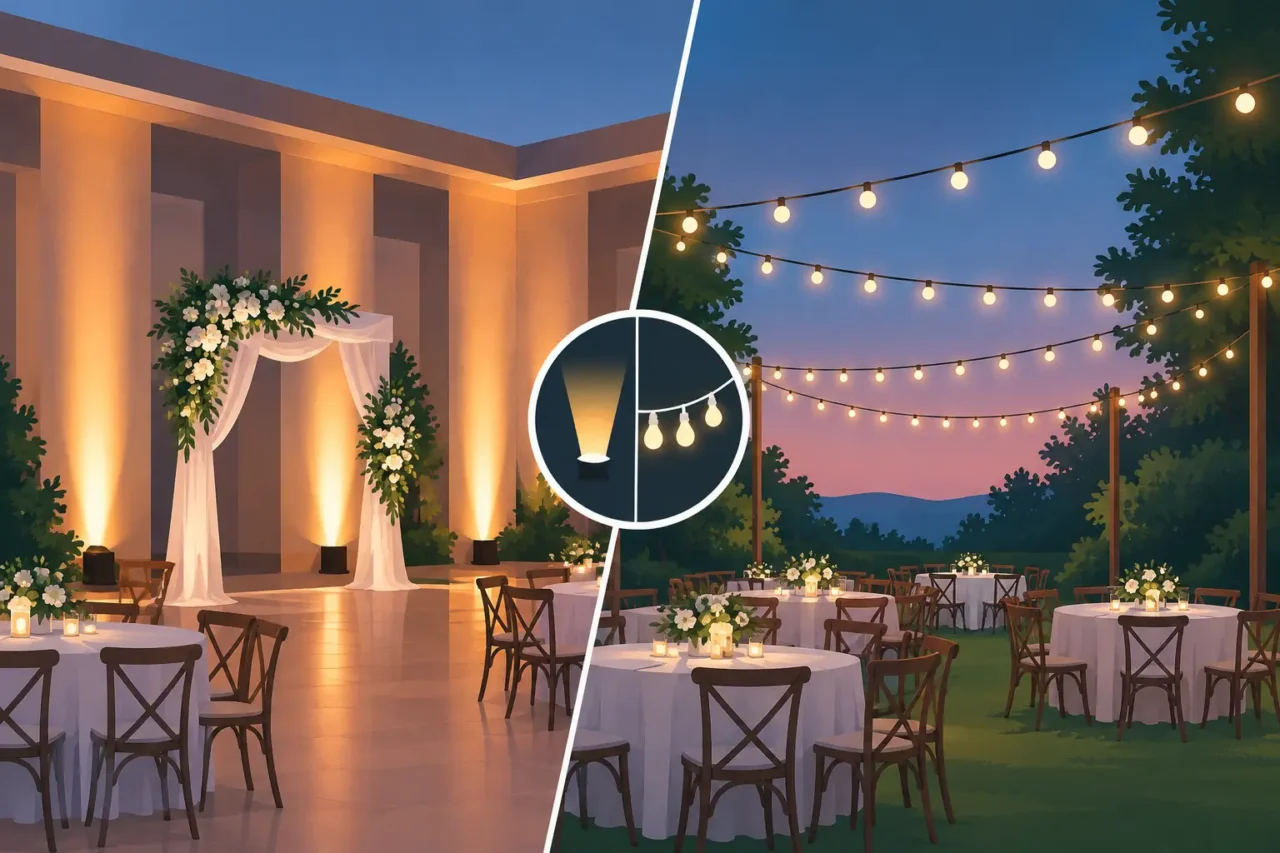
Uplighting uses compact fixtures placed along walls, columns, draping, or other architectural features. The lights shine upward, adding color, depth, and definition to the room. It is especially effective in venues with high ceilings, neutral walls, exposed brick, stone, or interesting columns that deserve to be noticed.
For a wedding reception, uplighting can shift the mood quickly without changing the room itself. Warm amber can make a large ballroom feel more inviting. Blush or soft lavender can support a romantic palette without competing with florals. Deep blue, purple, or jewel tones can bring energy to an evening dance floor.
One practical advantage is control. Uplighting can often be adjusted as the event moves from dinner to dancing. A subtle color wash may be right while guests eat and toasts are underway, while brighter or more dynamic colors can build excitement later in the night. This makes uplighting a strong option for couples who want the room to feel intentionally designed from start to finish.
Uplighting also works well when the venue is already beautiful but needs a little more dimension. Rather than covering a historic hall or mountain-view event space with decor, lighting can highlight what is already there. For Colorado Springs celebrations, that can be especially valuable in venues where natural materials, tall ceilings, or scenic windows are part of the appeal.
Where uplighting has limits
Uplighting is not usually the lighting choice that creates a cozy ceiling effect. It enhances the perimeter and structure of a room, but it does not give guests the feeling of dining beneath a canopy of light. If your vision includes a warm, garden-party atmosphere, uplighting alone may feel too formal or too focused on the walls.
Color selection also matters. Highly saturated lighting can look dramatic in person, but it can affect the appearance of linens, flowers, and skin tones in photographs. This does not mean bold color is off limits. It means the lighting plan should account for key moments such as first dances, parent dances, cake cutting, and portraits. A skilled event team can keep the room festive while protecting the flattering, natural-looking light your photographer needs.
Finally, uplighting needs enough clear wall space to make an impact. In a room crowded with windows, furniture, or heavy decor, there may be fewer places to position fixtures effectively.
What string lights do best
String lights, often called café lights or bistro lights, create a warmer and more relaxed visual effect. They are typically suspended overhead, draped across a patio, woven through a tent, or installed beneath a ceiling. Their glow draws the eye upward and makes a large area feel more connected and welcoming.
String lights are a natural fit for outdoor receptions, tented weddings, barns, patios, and venues with exposed beams. They can turn an open outdoor space into a defined gathering area after dark. Guests know where the celebration is happening, and the lighting encourages them to linger rather than head indoors when the sun sets.
They also pair well with wedding styles that lean organic, romantic, rustic, coastal, or modern-industrial. Even a simple reception layout can feel more intentional under a clean canopy of warm bulbs. For milestone parties, corporate gatherings, and school events, string lights can add celebration without requiring a highly themed look.
From a guest-experience perspective, string lights help create the kind of room people want to stay in. They soften wide-open spaces and make tables, dance floors, and lounge areas feel connected. That visual warmth can be just as meaningful as centerpieces when guests are sharing dinner and conversation.
Where string lights have limits
String lights are more dependent on the venue than uplighting. They need safe, practical anchor points, enough ceiling height or outdoor clearance, and a setup plan that does not interfere with guest traffic, sprinklers, venue rules, or other decor. A tent may need proper support structures. An indoor ballroom may not permit anything to be hung from the ceiling.
They also require thoughtful placement around the dance floor. If the strands hang too low, they can block sightlines or create a cluttered look in photos. If they are installed too high or spread too far apart, their effect can disappear. This is one reason lighting is worth discussing early, before the floor plan and decor decisions are final.
While string lights provide a beautiful ambient glow, they are not always enough on their own for a very dark room or an event that needs strong color changes. They add warmth, not typically a dramatic color wash. If you want your venue to reflect your wedding colors or transition into a high-energy dance party, string lights may need support from uplighting or DJ lighting.
Uplighting versus string lights: how to choose
Start with the feeling you want guests to have when they enter the reception. Choose uplighting when you want to emphasize the venue, bring your color palette into the room, or create a more polished evening look. Choose string lights when you want overhead warmth, visual intimacy, and a relaxed gathering-space feel.
Then consider the venue itself. A traditional ballroom, hotel reception room, or event center with clear walls and columns often benefits most from uplighting. A barn, patio, tent, courtyard, or space with beams often gives string lights the stronger visual advantage. This is not a hard rule. A ballroom can look beautiful with carefully designed string lights, and a barn can gain sophistication from rich uplighting.
Your event timeline should guide the decision, too. For an afternoon reception with plenty of daylight, lighting may become most noticeable during dinner and dancing. For a winter wedding or a reception that begins near sunset, lighting will shape the experience much earlier. Ask when the room will transition from natural light to evening light, then plan for that specific moment.
Budget is another real consideration. Costs vary based on room size, installation needs, ceiling height, the number of fixtures or strands required, and venue access. String lights can involve additional labor when they need to be suspended safely across a large space. Uplighting can be an efficient way to make a major visual impact in a room with usable walls. Instead of choosing based on a single price point, compare what each option changes in the room.
When using both makes sense
For many receptions, uplighting and string lights are not competing choices. They work together. String lights create the soft overhead glow, while uplighting adds color and definition around the edges of the room. The result feels layered rather than over-lit.
A tented wedding is a great example. Café lights can define the ceiling and make the tent feel inviting, while uplights can accent tent poles, a sweetheart table backdrop, or the perimeter near the dance floor. In a ballroom, uplighting can enrich the walls while a small installation of string lights or warm pendant-style lighting adds intimacy over a lounge or dance area.
The key is restraint. Too many colors, effects, or lighting directions can make a reception feel busy. A coordinated plan should support the flowers, linens, music, and floor plan instead of competing with them. When your DJ, lighting provider, photographer, and coordinator are aligned, the room is easier to manage and the transitions feel natural.
Plan lighting around the moments that matter
Before booking, think beyond the first impression. Consider how lighting will look during the ceremony entrance, dinner, toasts, first dance, open dancing, and your exit. A lighting plan that looks beautiful in an empty room should also make guests comfortable, allow photographers to capture expressions clearly, and keep the dance floor inviting.
Complete Weddings + Events can help couples coordinate lighting with DJ entertainment and other key reception details, reducing the back-and-forth between separate vendors. Whether you choose uplighting, string lights, or a combination, the right setup should make your venue feel like it was chosen specifically for your celebration – and let you spend the night enjoying it with the people you invited.