Reception Lighting Guide Couples Can Plan With Ease
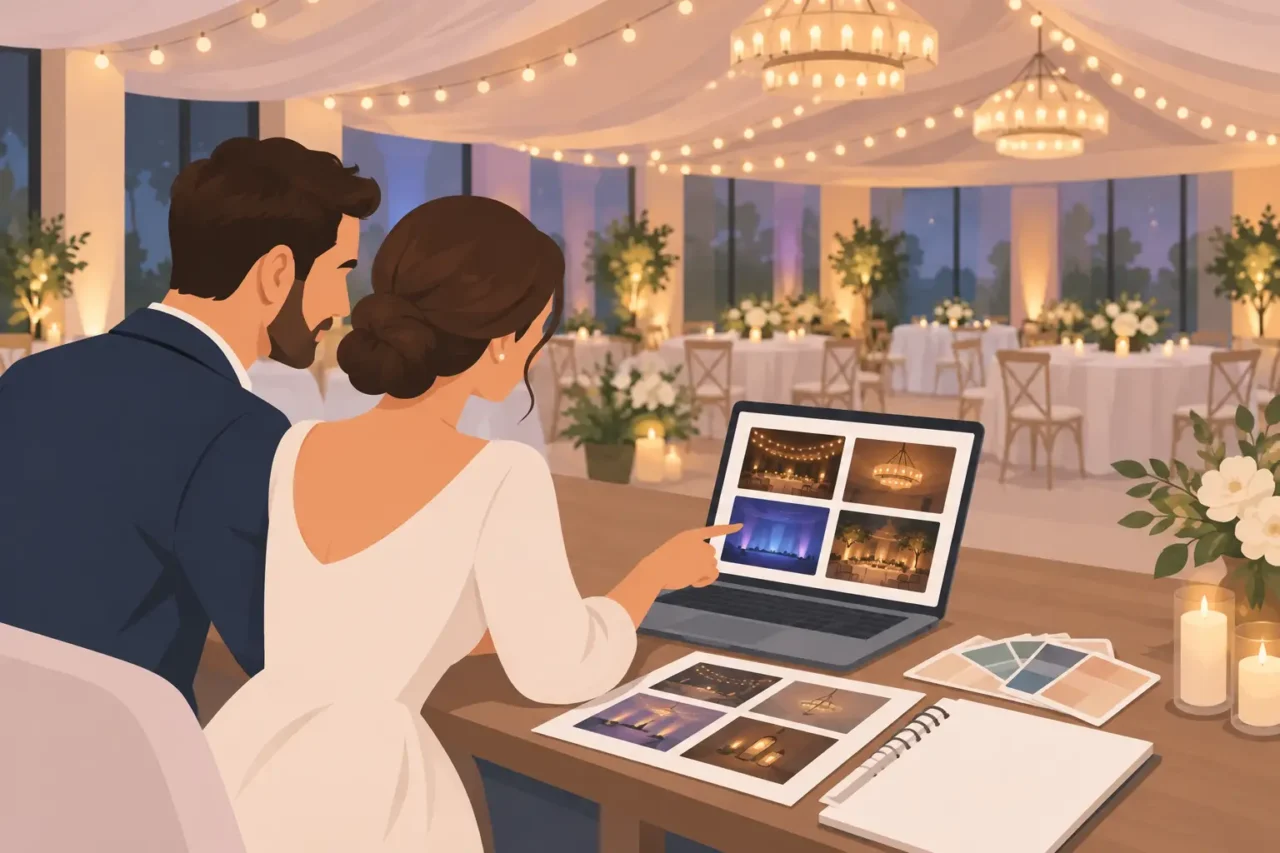
The room can be beautifully decorated and still feel unfinished the moment the sun goes down. This reception lighting guide for couples starts with that reality: lighting is what helps guests see the details, find the dance floor, enjoy dinner, and feel the energy change as your celebration moves from one moment to the next.
Rather than treating lighting as a last-minute add-on, plan it alongside your venue layout, photography, DJ or entertainment, and décor. A few thoughtful choices can make a large ballroom feel intimate, give a rustic venue a polished finish, and create photos that look warm without leaving guests in the dark.
Start With the Feeling You Want to Create
Before choosing fixtures or colors, decide how you want the reception to feel. A candlelit dinner, a bright modern party, and a romantic garden-inspired celebration can all use lighting well, but they need different approaches.
For many couples, warm white lighting is the most versatile starting point. It flatters skin tones, complements most floral palettes, and feels inviting during dinner. Colored lighting can add personality later in the evening, especially on the dance floor, but it should support the atmosphere rather than compete with your décor.
Think about the transitions in your reception, too. Guests need enough light to settle in, read menus, and move safely during cocktail hour and dinner. Once dancing begins, the room can become more dramatic. A lighting plan that changes with the schedule gives the evening a natural build instead of making every moment feel the same.
Know What Your Venue Already Provides
Every lighting conversation should begin with the venue. Ask to see the space at the same time of day as your reception, if possible. A room with floor-to-ceiling windows will look very different at 5:00 p.m. than it will at 9:00 p.m., especially in Colorado Springs where bright afternoons can shift quickly into darker evenings.
Pay attention to overhead fixtures, wall sconces, dimmers, windows, ceilings, and available power. Some venues have attractive built-in lighting that only needs to be softened or enhanced. Others have fluorescent fixtures, limited dimming options, or a dark ceiling that absorbs light. Those details influence how much supplemental lighting will make a difference.
Also ask what the venue permits. Confirm whether candles must be enclosed, whether equipment can be mounted or hung, where extension cords may run, and when your lighting team can access the room. The best design still has to work within venue rules and a realistic setup timeline.
Build Your Plan Around Four Key Areas
Couples do not need lighting in every corner of the room. The strongest plans focus first on the places guests will notice and use most.
- The guest tables: Warm ambient light helps dinner feel comfortable and makes centerpieces visible without overpowering them.
- The dance floor: This is where movement, color, and changing effects have the biggest impact after formalities end.
- The head table or sweetheart table: A subtle wash of light can distinguish this focal point and help it photograph well.
- The room perimeter and architectural features: Uplighting along walls, columns, draping, or exposed beams gives the entire space depth and polish.
If your budget is limited, prioritize perimeter uplighting and a well-lit dance floor before adding specialty effects. These two elements often deliver the most noticeable transformation because they shape the room as a whole and support the evening’s energy.
Uplighting Creates a Finished Room
Uplighting places fixtures at the base of walls or features and directs light upward. It can make a plain ballroom feel intentional, highlight stonework or columns, and carry your wedding colors into the room without covering every surface in décor.
Warm amber, champagne, soft blush, and neutral white are popular choices for dinner. Rich jewel tones and deeper shades can work beautifully for a more dramatic look, particularly in the evening. If you want colored lighting, ask whether it can shift after dinner. Keeping colors subtle while guests eat and increasing the intensity for dancing is usually more comfortable and more flattering in photos.
There is a trade-off: very saturated blue, purple, or red light can alter how skin tones, white dresses, florals, and food appear. It can be exciting on the dance floor, but it is rarely the best choice for the entire reception from start to finish.
Bistro Lights Add Warmth, But Need the Right Setting
Bistro or café-style string lights can create a relaxed, welcoming ceiling treatment. They are especially effective in tents, barns, patios, and venues with high or open ceilings. They can also help define the reception area in a larger outdoor setting.
Their success depends on installation. A loose or poorly planned pattern can look cluttered, while professionally placed strands create a soft canopy that photographs beautifully. Confirm where they can be attached and whether the venue needs to approve the setup. For outdoor receptions, weather and wind plans matter just as much as the look.
Pin Spotting Highlights Details
Pin spotting uses focused beams to illuminate centerpieces, cakes, and other visual focal points. It is a smart option when you have detailed florals, a statement cake, or a sweetheart table you want guests to notice.
This is a detail-driven enhancement, not always a first priority. If the room itself is dim or flat, start with ambient lighting and uplighting. Once the overall room feels balanced, pin spotting can make your investment in décor stand out even more.
Plan Lighting With Your Photo and Video Team in Mind
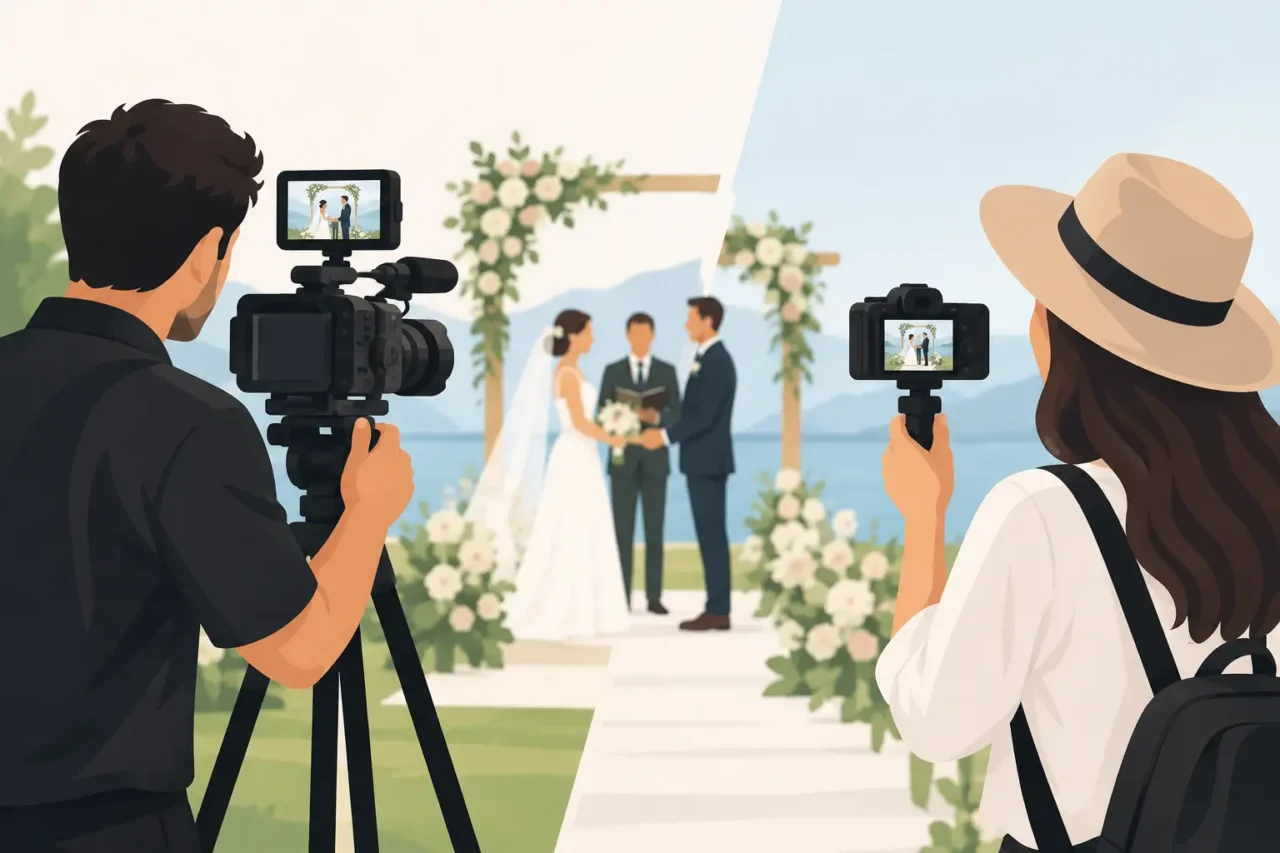
Reception lighting affects every image created after sunset. Your photographer and videographer need enough consistent light to capture entrances, toasts, dances, and candid moments without relying on harsh on-camera flash.
Warm, even light around the head table and dance floor is usually helpful. Extremely dark rooms, fast flashing effects during formal dances, or one intense spotlight can make coverage more difficult. That does not mean your party has to be brightly lit all night. It means the key moments deserve a plan.
Share your reception timeline with the lighting and entertainment teams. If you want a spotlight for a first dance, grand entrance, or cultural tradition, identify the exact location and timing in advance. When DJ, lighting, photography, and video services are coordinated under one experienced event team, communication is simpler and the cues are easier to execute on time.
Set a Budget That Matches Your Priorities
Lighting costs vary based on room size, fixture count, setup complexity, power access, and specialty equipment. Instead of selecting options one at a time, tell your event professional what matters most: a romantic dinner atmosphere, an energetic dance floor, dramatic ceiling treatment, better photos, or a defined outdoor space.
That conversation makes it easier to build a package around real priorities. A smaller reception may need only a few carefully positioned elements. A large ballroom or tent may require more coverage to avoid dark areas and create a cohesive look. More equipment is not automatically better. The right amount is what makes the room feel intentional while keeping guest comfort and your budget in balance.
Be sure to ask what is included in the quote. Setup, teardown, delivery, labor, programming, and venue coordination can affect the final cost. Clear expectations prevent surprises during the final weeks of planning.
Avoid the Most Common Lighting Mistakes
The most frequent mistake is waiting until the décor is finalized to think about light. By then, a couple may discover that their centerpieces disappear after dark, their venue’s overhead lights cannot dim, or their preferred lighting installation cannot be safely added.
Another common issue is choosing colors solely from a swatch. A deep navy may look elegant on paper but turn a small room very dark. A blush tone may be nearly invisible against a warm beige wall. Ask for recommendations based on your actual venue, wall color, ceiling height, and season.
Finally, leave room in the plan for function. Guests need clear walkways, staff need access to service areas, and older relatives should be able to move comfortably between tables and restrooms. Great reception lighting feels celebratory, but it also makes the event easier for everyone to enjoy.
Bring Your Lighting Plan Together Early
The most useful question is not, “What lighting should we rent?” It is, “How do we want this room to feel from our first entrance through the last song?” Once you have that answer, your venue, décor, entertainment, and lighting choices can work toward the same result.
A thoughtful lighting conversation early in the planning process gives you more options and fewer event-day decisions. Then, when the lights lower, the music rises, and your guests fill the dance floor, the room will feel like it was designed for your celebration all along.