
How to Schedule Wedding Portraits Without Stress
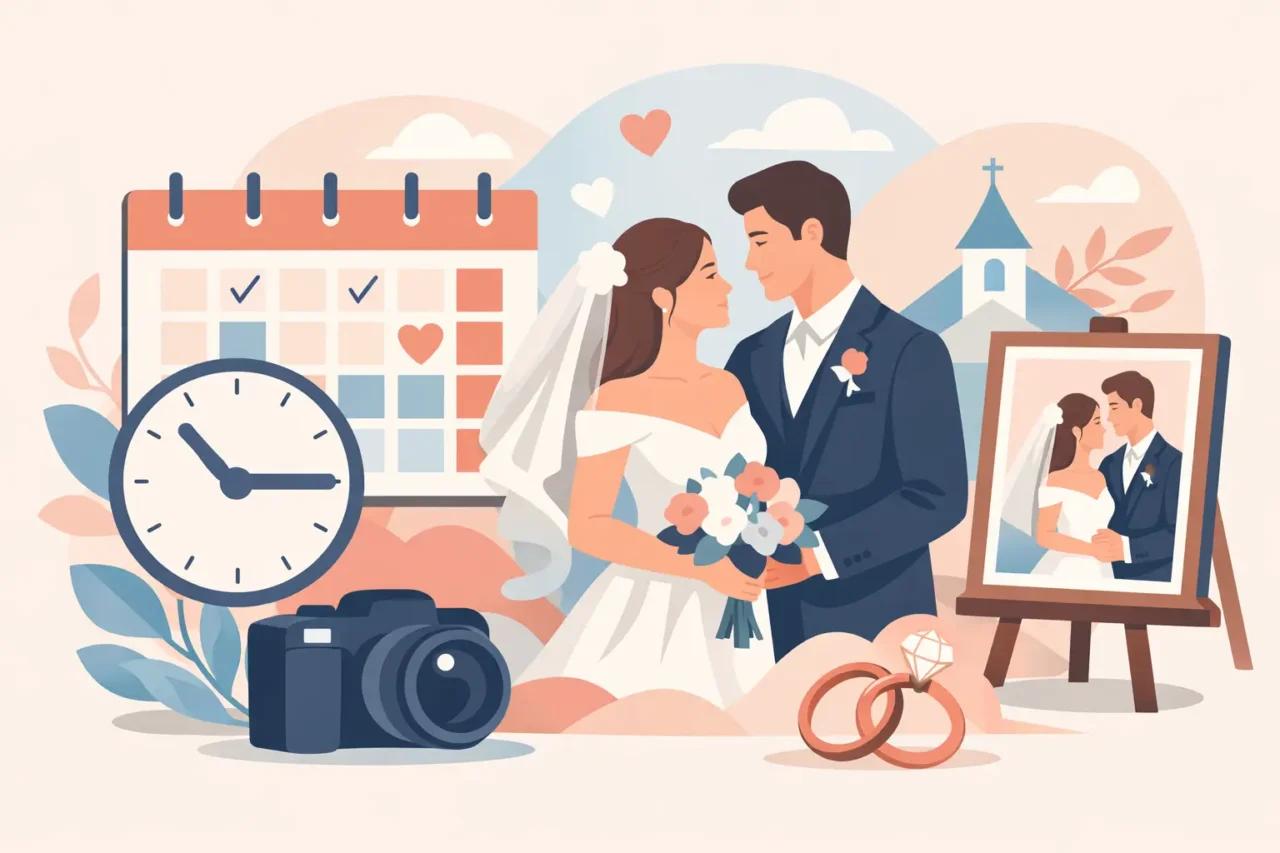
A wedding portrait schedule is where a beautiful plan either gains breathing room or starts to feel rushed. When you know how to schedule wedding portraits around your ceremony, reception, travel time, and changing Colorado light, you can protect the moments that matter without turning your wedding day into a photo shoot.
The goal is not to fill every minute. It is to create a thoughtful timeline that gives you polished portraits, genuine candid moments, and enough time to enjoy the people who came to celebrate with you.
Start With the Light and Your Ceremony Time
Your ceremony time is the anchor for the entire portrait plan. Once it is set, your photographer can work backward to determine when to photograph details, getting ready, wedding party portraits, family formals, couple portraits, and sunset photos.
Natural light is often softest and most flattering in the hours shortly after sunrise and before sunset. For Colorado Springs weddings, this can be especially helpful because open skies, mountain views, and bright afternoon sun may create very different conditions in a short amount of time. A summer ceremony at 3:00 p.m., for example, may call for shaded portrait locations before the ceremony and a short golden-hour session later in the evening.
That does not mean every couple needs a sunset portrait session. If your reception is short, the venue is indoors, or you would rather remain on the dance floor, your photographer can create a plan that works within those priorities. The best schedule reflects the experience you want, not a formula.
How to Schedule Wedding Portraits Before the Ceremony
Taking portraits before the ceremony is one of the most effective ways to create a relaxed reception timeline. Many couples choose a first look, then complete wedding party and family portraits before guests arrive. After the ceremony, they can head directly to cocktail hour or enjoy time with friends and family.
A typical pre-ceremony portrait block may include detail photos and getting-ready images first, followed by a first look, couple portraits, wedding party portraits, and immediate-family photos. Plan more time than you think you need for hair and makeup, getting dressed, buttoning outfits, and moving between locations. Ten extra minutes can make a meaningful difference when the day is moving quickly.
A first look is a personal choice, not a requirement. Some couples love the private, emotional moment it creates. Others prefer to see each other for the first time during the ceremony. Both choices can lead to meaningful photographs. The practical difference is timing: a first look gives you more portrait time before the ceremony, while a traditional reveal moves more couple and wedding party portraits to the post-ceremony window.
A practical pre-ceremony timeline
For a 5:00 p.m. ceremony, a photographer might arrive around 1:30 or 2:00 p.m. for details and preparation. The first look could begin around 3:00 p.m., followed by couple portraits, wedding party portraits, and select family groupings. This is only an example, but it shows why an early start creates flexibility later.
If you are not doing a first look, consider completing as many individual and group photos as possible beforehand. Separate wedding party photos, individual portraits, details, and photos with parents can all reduce the work left after the ceremony.
Build a Family Portrait List That Moves Quickly
Family formals deserve a clear plan because they involve the most people, the most moving pieces, and often the most emotional expectations. A concise list helps your photographer and coordinator bring in each group efficiently, rather than calling out names and trying to determine who belongs in the next image.
Keep the list focused on the combinations you truly want displayed and remembered. Immediate family, grandparents, siblings, and any especially meaningful extended-family groupings are a good starting point. If you have a large family, reserve extended-family portraits for a separate time or plan a few larger group photos instead of every possible combination.
Assign one reliable person from each side of the family to help gather relatives. They should know the key names, have a phone available, and understand where portraits will take place. This small role prevents the common delay of searching for someone who has stepped away for a drink or greeting.
Plan approximately three to five minutes per group, with extra time for grandparents, young children, or larger blended families. A list of 10 groupings may take 30 to 45 minutes, depending on the setting and how prepared everyone is. Keep older relatives comfortable by providing shade, seating nearby, and a clear expectation of when they are needed.
Leave Room for Travel, Touch-Ups, and Real Life
The most reliable wedding timelines include buffer time. Portraits can run late because of traffic, a late shuttle, a missing boutonniere, a sudden weather change, or simply a meaningful conversation you do not want to interrupt. Build transitions into the day instead of expecting every segment to end and begin at the exact same minute.
If you are using multiple locations, account for loading vehicles, parking, walking from the parking area, and gathering the wedding party. A location that looks five minutes away on a map may need 15 or 20 minutes in a wedding-day schedule. This matters even more for mountain venues or celebrations with separate ceremony and reception sites.
Also plan a few minutes for touch-ups before couple portraits. Lip color, hair, jackets, bouquets, and boutonnieres all benefit from a quick check. It is much easier to take care of those details before the camera is ready than to fix them later in editing.
Protect Time for Just the Two of You
Couple portraits are often the only quiet part of the day. Schedule enough time to settle in, breathe, and be present with each other. Most couples benefit from at least 20 to 30 uninterrupted minutes, whether that happens before the ceremony, after it, or in two shorter sessions.
A split approach works particularly well. Take 15 to 20 minutes for portraits after a first look, then step outside for another 10 to 15 minutes near sunset. The earlier session handles the must-have images, while the later one gives you variety in lighting and a brief pause from the reception.
Tell your DJ, coordinator, and photographer if you are stepping away during dinner or dancing. When your event team communicates, they can hold a special song, adjust an announcement, or make sure you return before an important reception moment.
Coordinate Portraits With Cocktail Hour and Reception Events
Portrait timing affects the guest experience, too. If you will be unavailable immediately after the ceremony, cocktail hour needs enough food, drinks, and entertainment to keep guests comfortable. If you finish portraits before the ceremony, you can join cocktail hour and begin the reception with much more ease.
Avoid scheduling formal portraits during major reception moments whenever possible. Toasts, first dances, cake cutting, parent dances, and open dancing are hard to recreate authentically. Your photo, video, DJ, and coordination teams should share the same timeline so no one is surprised when the next event begins.
This is where booking connected services can simplify planning. When photography, videography, DJ and MC services, and coordination support are working from one coordinated timeline, transitions are easier to manage and priorities are less likely to get lost. Complete Weddings + Events helps couples bring these moving pieces together while keeping the celebration at the center.
Adjust the Plan for Season, Weather, and Venue
A portrait schedule should be flexible enough to handle your actual wedding conditions. In summer, consider heat, strong midday sun, and afternoon thunderstorms. In fall and winter, sunset may arrive much earlier than expected, and outdoor portrait time may need to happen before the ceremony. Indoor backup locations are valuable for every season.
Ask your venue about shaded areas, covered patios, interior spaces with window light, and photo-friendly locations that do not disrupt guests. If your ceremony space must be reset for the reception, your team may need portraits to happen elsewhere. Knowing this early prevents last-minute changes.
Your attire matters as well. A long train, high heels, delicate fabric, or a heavy suit can affect how far and how quickly you can move. Choose portrait locations that support the look you want without making the experience uncomfortable.
Share the Final Timeline Before the Wedding
Once your portrait plan is set, send the final schedule to your wedding party, immediate family, venue, transportation provider, and event professionals. People do not need every detail, but they should know when and where they are expected for photos.
On the wedding day, let your photographer and coordinator guide the schedule. You should not be checking the clock or tracking down relatives. A well-prepared team can keep portraits moving, adjust when something changes, and protect the moments you want to remember.
The strongest portrait timeline gives you structure without making the day feel scripted. Set aside the time, prepare the people who need to be there, and leave a little space for the unexpected. Then you can step into your wedding day knowing the photographs will reflect not only how everything looked, but how it felt to celebrate it together.