
How to Plan Reception Lighting That Feels Right
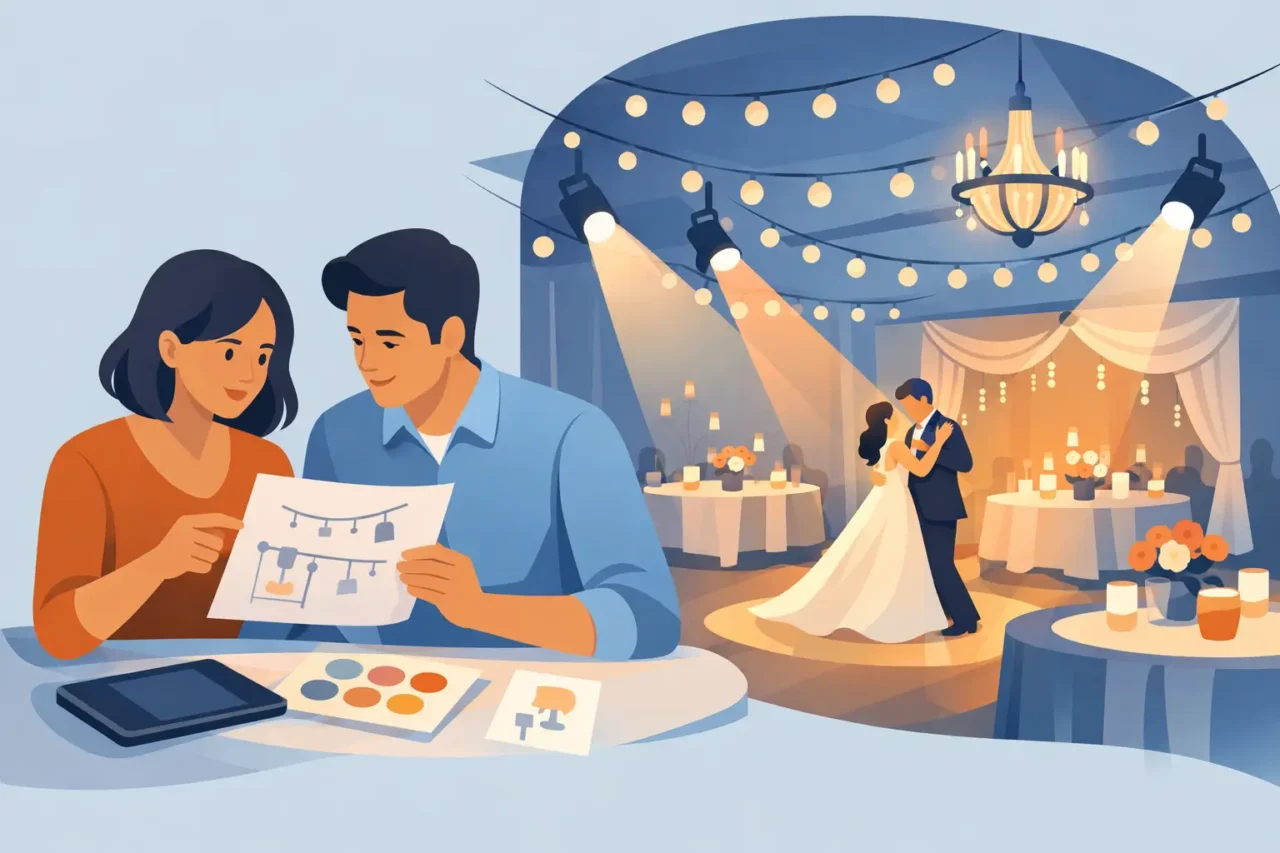
The room may look beautiful in daylight, but your reception will likely be remembered after the sun goes down. The warm glow during dinner, the spotlight on your first dance, and the energy on a packed dance floor all come from thoughtful choices made ahead of time. Knowing how to plan reception lighting helps you create a celebration that feels personal, photographs well, and stays comfortable for guests from cocktail hour through the final song.
Start With the Feeling You Want to Create
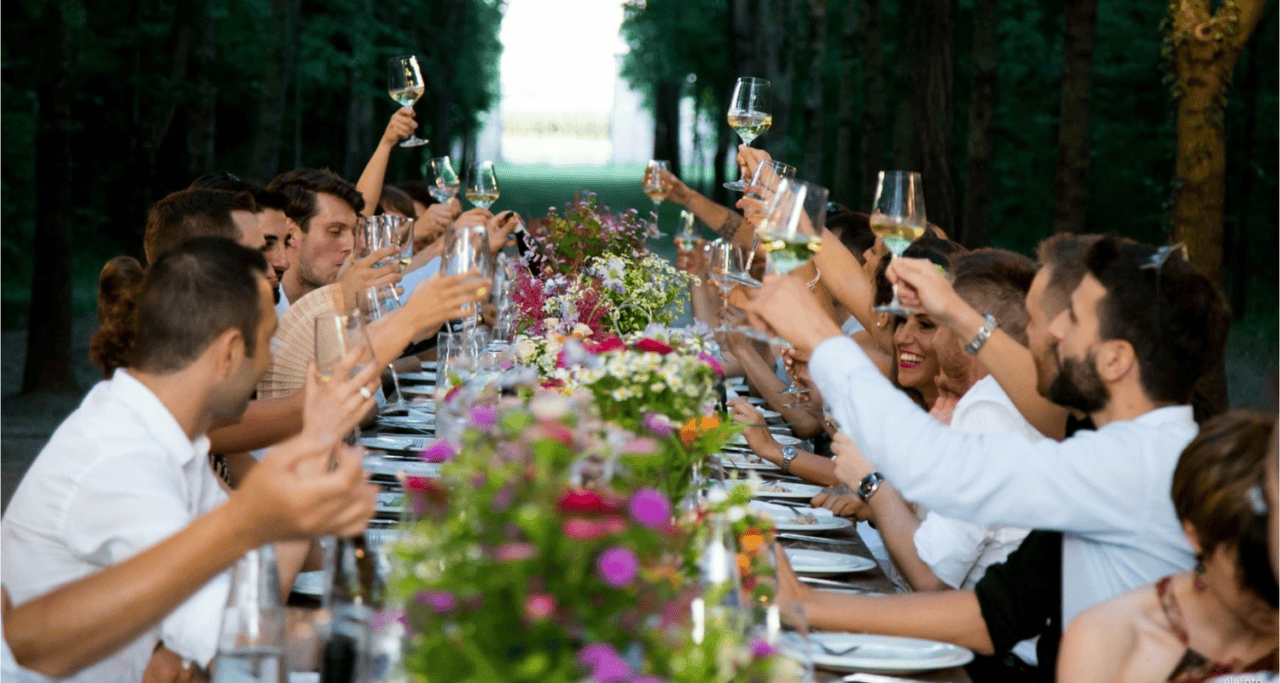
Lighting is not only practical. It shapes how a room feels before guests take their first seat. A formal ballroom may call for soft amber tones and elegant overhead lighting, while a modern industrial venue can handle bolder color and contrast. An outdoor reception in Colorado Springs or the surrounding mountain communities may need a plan that works beautifully at sunset and remains functional once the temperature and light drop.
Before choosing equipment or colors, consider three moments: guest arrival, dinner, and dancing. Arrival lighting should make entrances, signs, and seating easy to see. Dinner lighting should be flattering and warm enough for conversation. Later, the lighting can become more dynamic to signal that the celebration has shifted to the dance floor.
Your wedding colors can guide the design, but they should not control every fixture. Deep blue uplighting may look dramatic around the perimeter, for example, while a warm white wash around tables keeps faces and food looking natural. The most memorable lighting plans balance your style with what guests need to comfortably enjoy the room.
Understand What the Venue Already Provides
Ask your venue for photos of receptions held after dark, not just daytime marketing photos. This gives you a realistic view of ceiling fixtures, wall colors, windows, outlets, and any areas that tend to stay dark. A room with chandeliers may need only accent lighting, while a large tent or barn may require a more complete lighting plan.
Find out whether the venue allows candles, hanging installations, haze effects, or equipment attached to walls and ceilings. Some venues have strict rules about open flames, extension cords, load-in timing, and where lighting stands can be placed. These details affect both the look and cost of your design.
It also helps to identify the features you want to highlight. Architectural columns, stone walls, drapery, a sweetheart table backdrop, and a head-table wall are all strong candidates for uplighting. If the room has beautiful features, lighting can make them feel intentional. If it has features you would rather minimize, careful placement can draw attention elsewhere.
Build Your Reception Lighting Plan Around Key Areas
A well-lit reception does not mean every corner is equally bright. Guests need clear paths and useful visibility, while focal areas deserve extra attention. Think about the room in zones.
The entrance and welcome area need enough light for guests to find cards, seating assignments, and the guest book. The dining space should feel warm rather than harsh, with enough illumination for guests to see their meals and one another. The bar, dessert display, photo booth, and lounge areas benefit from their own small visual moments, especially in a larger room.
The dance floor deserves a separate plan. During formal dances, a clean, flattering spotlight can keep the couple at the center of the moment. Once open dancing begins, movement and color can raise the energy without making the room feel like a nightclub if that is not your style.
Keep safety in mind throughout the layout. Stairs, restrooms, outdoor walkways, and transitions between indoor and outdoor spaces need dependable illumination. Decorative string lights are charming, but they are not always bright enough to guide guests safely. Functional lighting and decorative lighting should work together.
Choose the Right Mix of Lighting Types
Most receptions look more polished when they use layers rather than one dramatic effect. The right combination depends on your venue, guest count, timeline, and budget.
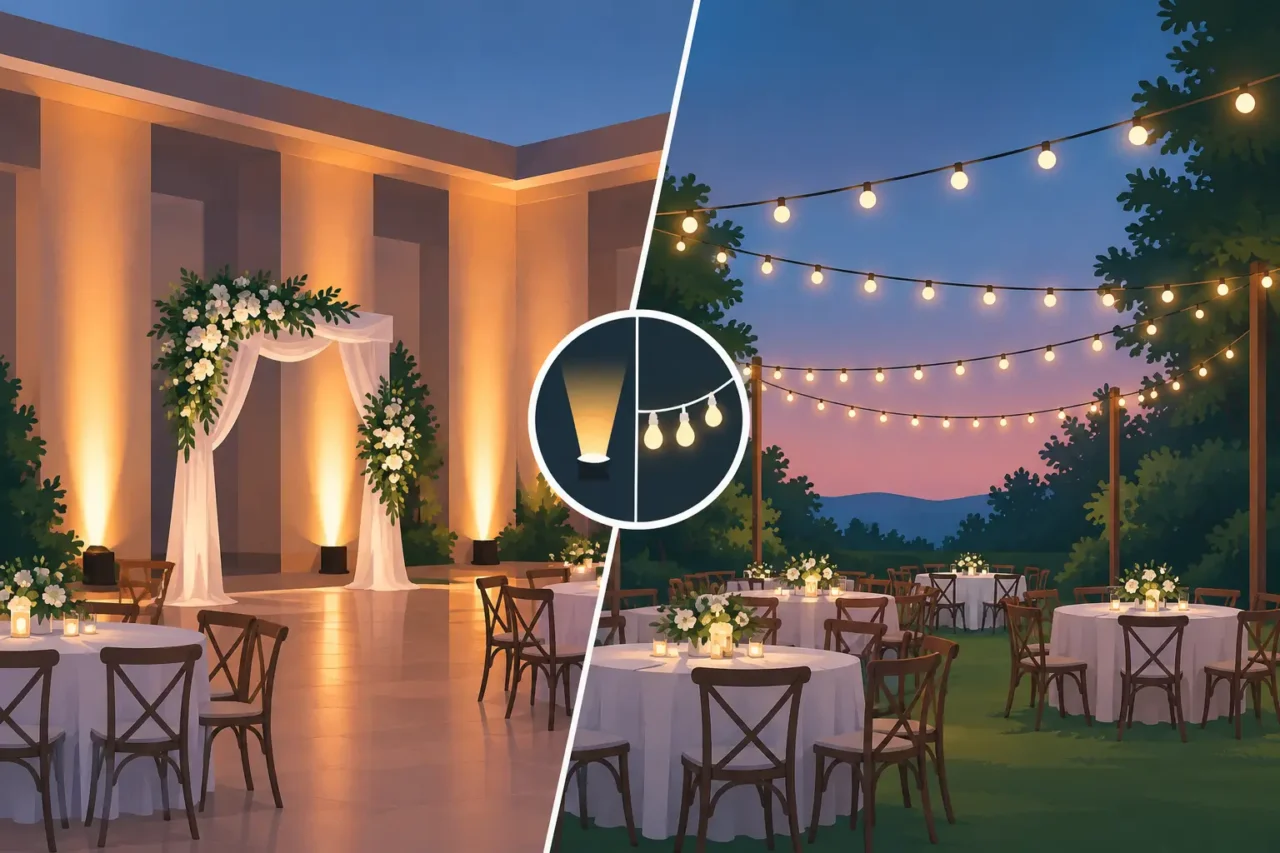
Uplighting is one of the most flexible options. Fixtures placed around the room can add color to walls, columns, drapery, or architectural details. It makes a neutral ballroom feel more customized and can shift from a soft dinner color to a more energetic dance-floor palette later in the evening.
Bistro lights or string lights bring warmth to tents, patios, barns, and open-ceiling spaces. They create a welcoming canopy overhead, though they need professional installation and a secure power plan. In a venue with high ceilings, they can add intimacy that floral decor alone may not achieve.
Pin spots are focused lights used to make centerpieces, cakes, and display tables stand out. They are especially useful when the room is dimmed for atmosphere but you still want the details you selected to be seen. Wash lighting provides broad coverage, while monograms or custom projections can add a personal touch to an open wall or dance floor.
For dancing, moving lights can add excitement, but restraint matters. A few well-programmed fixtures often look better than constant flashing effects. If you have older guests, a formal crowd, or a reception centered on conversation, ask for movement and color changes that feel celebratory without becoming distracting.
Coordinate Lighting With Photography, Video, and Your DJ
Reception lighting affects every camera in the room. Warm, even light usually flatters skin tones, while extremely dark rooms or fast-changing colored lights can make photography and video more challenging. That does not mean you have to skip the fun lighting. It means your creative team needs to coordinate the timing and placement.
Tell your photographer and videographer about the lighting design, particularly if you are using a spotlight for the first dance, sparkler-style effects, or a very dark dinner setting. They can plan their camera settings and recommend small adjustments that protect the look of your images.
Your DJ should also know when you want lighting changes. A great reception often has deliberate transitions: a polished look for introductions, warm light for toasts, a focused look for dances, and higher-energy color after the dance floor opens. When entertainment and lighting are planned together, those transitions feel smooth instead of improvised.
This is one reason many couples prefer booking connected event services through one team. With Complete Weddings + Events, lighting, DJ, photography, videography, and photo booth services can be planned with a shared timeline and a clearer understanding of the overall guest experience.
Set a Budget That Protects the Biggest Impact
Reception lighting can range from a handful of uplights to a full room transformation. Rather than starting with every available effect, begin with the areas that will make the largest visual difference. For many couples, perimeter uplighting, a well-lit dance floor, and safe pathway lighting create a stronger result than adding many small decorative elements.
If your budget is limited, prioritize the spaces guests will see and use most. A dark dance floor can feel uninviting, and a poorly lit head table can affect many photos. On the other hand, elaborate lighting in a hallway or unused corner may not add much value.
Ask for a proposal that separates essentials from optional upgrades. This makes it easier to compare choices and decide whether a projection, pin spotting, extra dance-floor effects, or outdoor lighting is worth the investment. Also ask whether setup, teardown, programming, and power requirements are included. A lower initial price can become less appealing if key production needs are added later.
Create a Timeline for How the Room Changes
The best reception lighting evolves with the event. During setup, your lighting team should test the room after any major decor is installed. Tall centerpieces, draping, and signage can block fixtures or change where shadows fall.
At guest arrival, use a welcoming level of light that helps people get oriented. During dinner and toasts, lower the intensity enough to create atmosphere while keeping faces visible. For special dances, bring attention to the couple without leaving the rest of the room completely black. Then let the dance floor become the visual center when the party begins.
Be sure to plan the final exit, too. If guests will leave through a patio, staircase, or dark parking-area route, confirm that the path is visible. The last few minutes should feel just as well cared for as the first.
A reception lighting plan does not need to be complicated to feel extraordinary. Choose the moments you want guests to notice, let the room support your celebration, and give your event team enough direction to make every transition feel effortless.