
Wedding Dress Alterations: What to Expect and How Far in Advance to Start
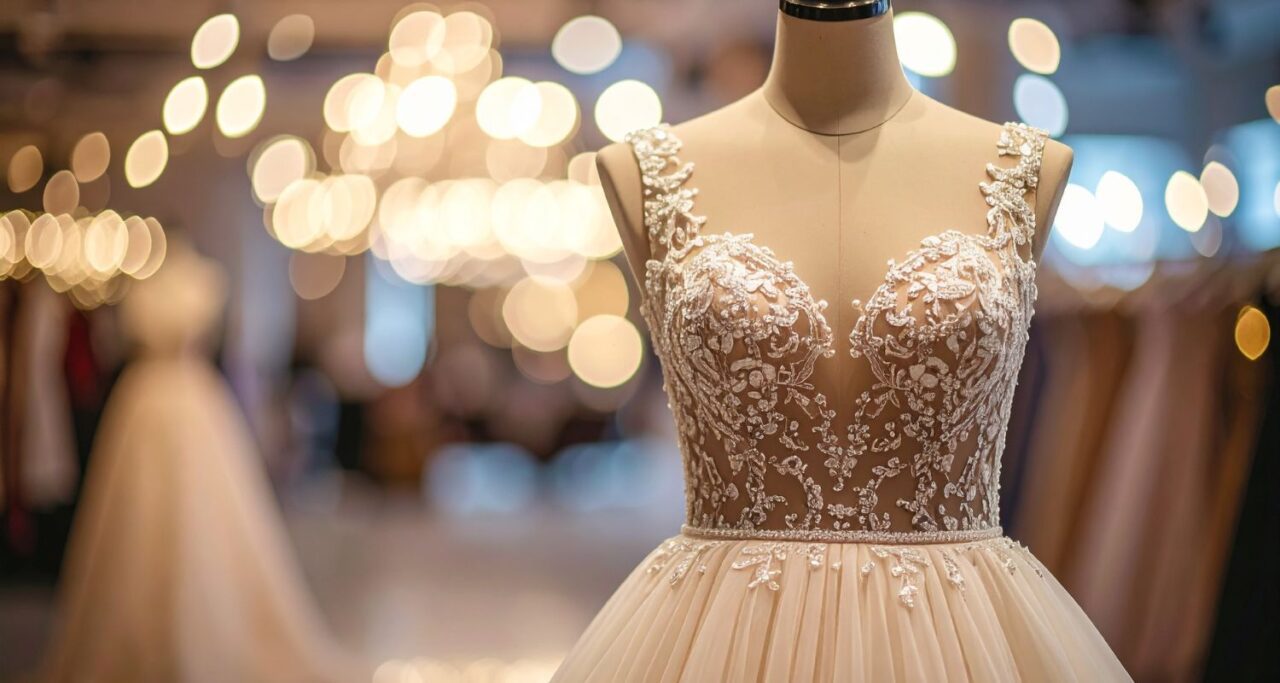
Wedding dress alterations are an essential step in creating a gown that fits comfortably and complements your body. Even dresses ordered in your bridal size usually need adjustments before the big day. Most brides should plan to begin alterations 8 to 12 weeks before the wedding, while the dress itself should ideally be ordered 6 to 12 months in advance. Depending on the gown and the changes required, expect to attend two to three fitting appointments.
Why Wedding Dress Alterations Are Worth It
Saying yes to your dress is an exciting milestone, but it’s only part of the journey. Bridal gowns are made using standard sizing, which means they are designed to fit a range of body types rather than one individual. Alterations help customize the dress so it fits your unique proportions instead of relying solely on the manufacturer’s measurements.
A properly tailored gown offers more than a polished appearance. It helps you walk with ease, sit comfortably during dinner, dance freely at your reception, and enjoy your wedding without constantly adjusting your dress. Small modifications can make a noticeable difference in both comfort and confidence throughout the day.
If you’re looking for trusted bridal alteration services, here are a few well-known options in Colorado:
- Dora Grace Bridal
- Bespoke Edge
- The sewing room
- Change of a dress alterations
- A3 Creative Alterations
It’s also important to remember that needing alterations doesn’t mean the dress was made incorrectly. Nearly every bride has some adjustments made before the wedding. Think of alterations as the final step that transforms a beautiful gown into one that feels like it was created just for you.
When Should You Begin Wedding Dress Alterations?
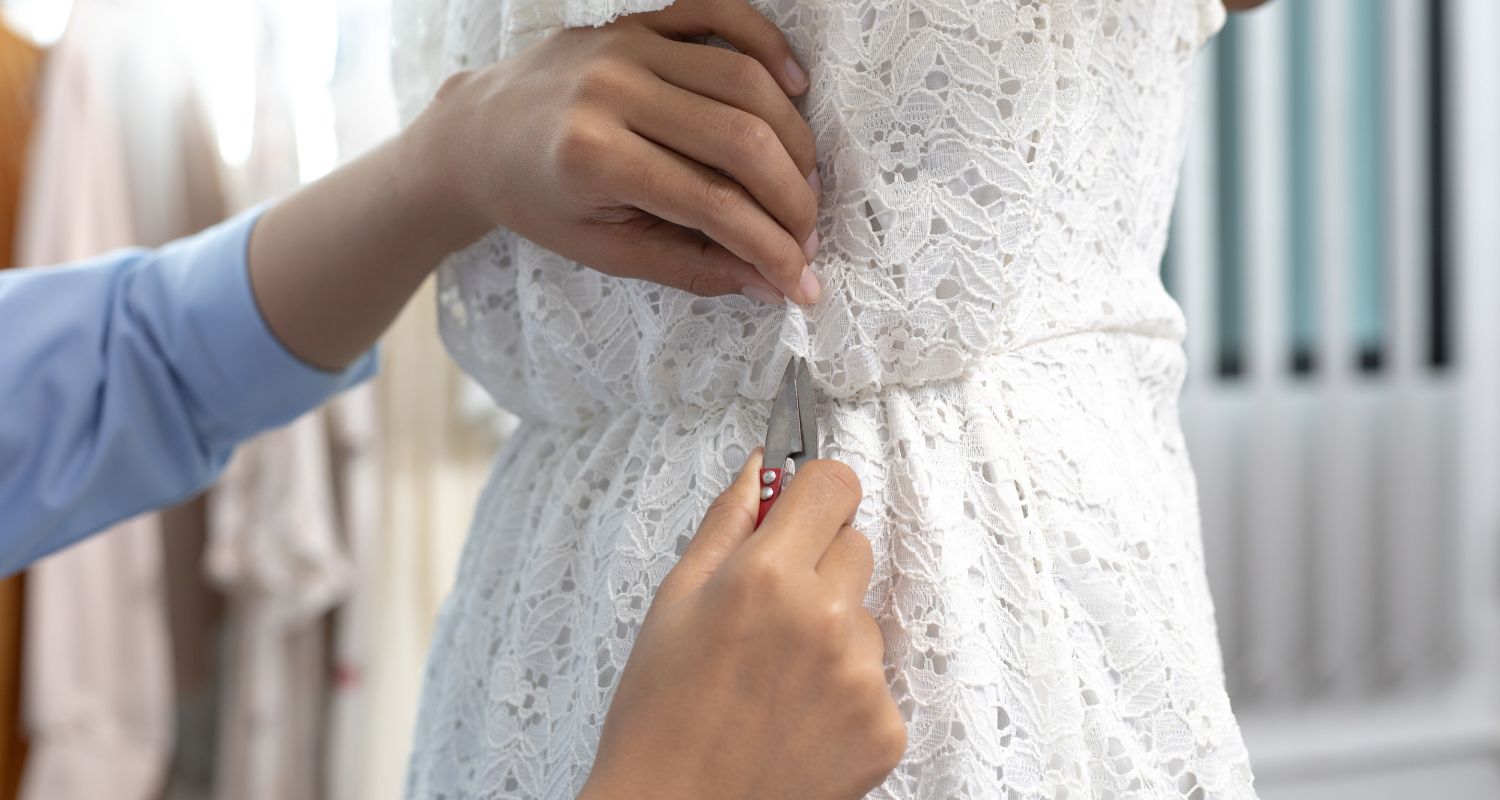
The ideal time to schedule your first fitting is 8 to 12 weeks before your wedding date. This allows enough time for your seamstress to complete multiple rounds of adjustments, schedule follow-up appointments, and make any necessary refinements without rushing.
If you’re getting married during a popular wedding season, it’s a good idea to book your seamstress shortly after your gown arrives. Many alteration specialists fill their calendars months in advance, especially during spring and fall weddings. Reserving your appointment early gives you more flexibility and helps you avoid last-minute scheduling challenges.
A Simple Alteration Timeline
6 to 12 Months Before Your Wedding
Purchase your wedding dress as early as possible. Bridal gowns often require several months to be made and delivered, especially if they’re custom ordered. Buying early also leaves extra time in case shipping or production delays occur.
8 to 12 Weeks Before
Attend your first fitting.
This appointment focuses on evaluating how the gown fits your body and identifying the changes needed. Your seamstress will pin the fabric, take measurements, and discuss how you want the dress to fit and feel.
4 to 6 Weeks Before
Return for your second fitting.
Most of the alterations should be completed by this stage. You’ll try on the updated dress to confirm the fit and determine whether any final adjustments are necessary.
1 to 2 Weeks Before
Attend your final fitting and take your dress home.
Your seamstress will make sure every alteration has been completed correctly and explain how to care for the dress before your wedding day.
Situations That May Require More Time
Certain dresses involve more detailed work than others. Consider beginning the alteration process earlier if your gown includes:
- Detailed lace appliqués
- Heavy beading or embellishments
- Long sleeves
- Multiple fabric layers
- A long train
- Corset construction
- Major size adjustments
- Custom design changes
These details often require extra care and additional appointments to ensure the finished gown maintains its original beauty.
What Happens During Wedding Dress Alterations?
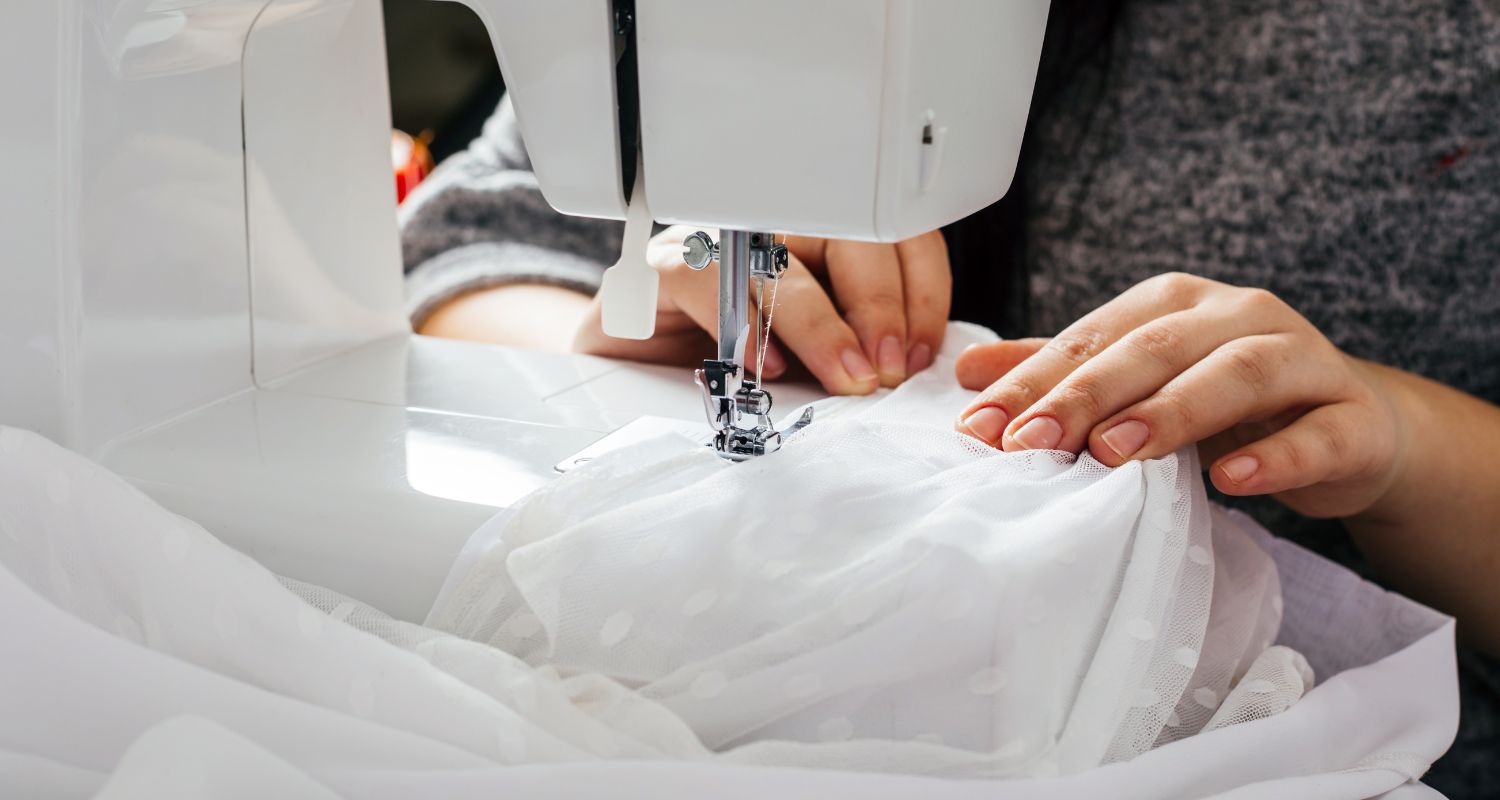
Most brides complete their alterations over two or three fittings, although more appointments may be necessary if significant modifications are involved. Each fitting has a different purpose and gradually perfects the fit of your gown.
First Fitting
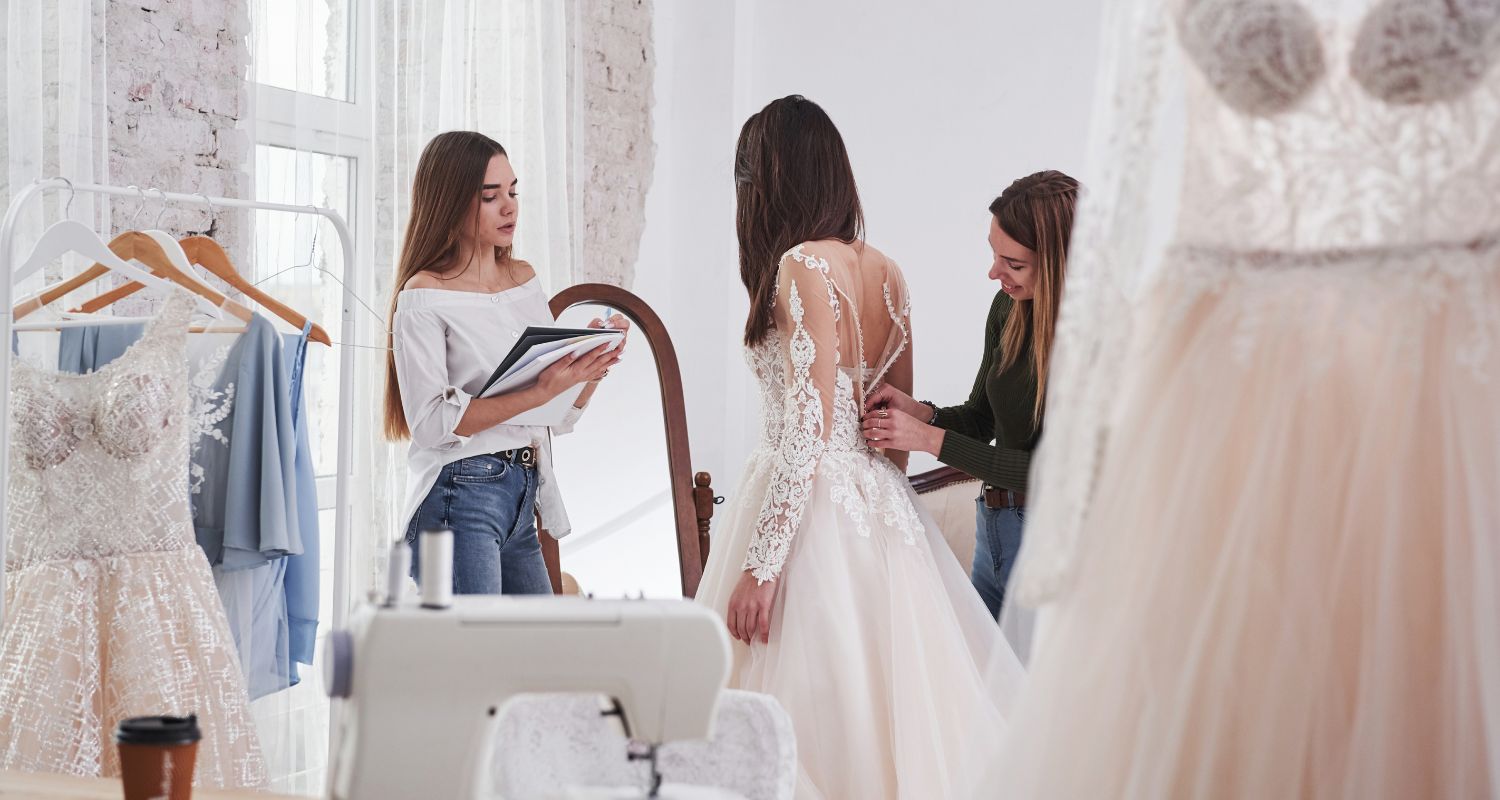
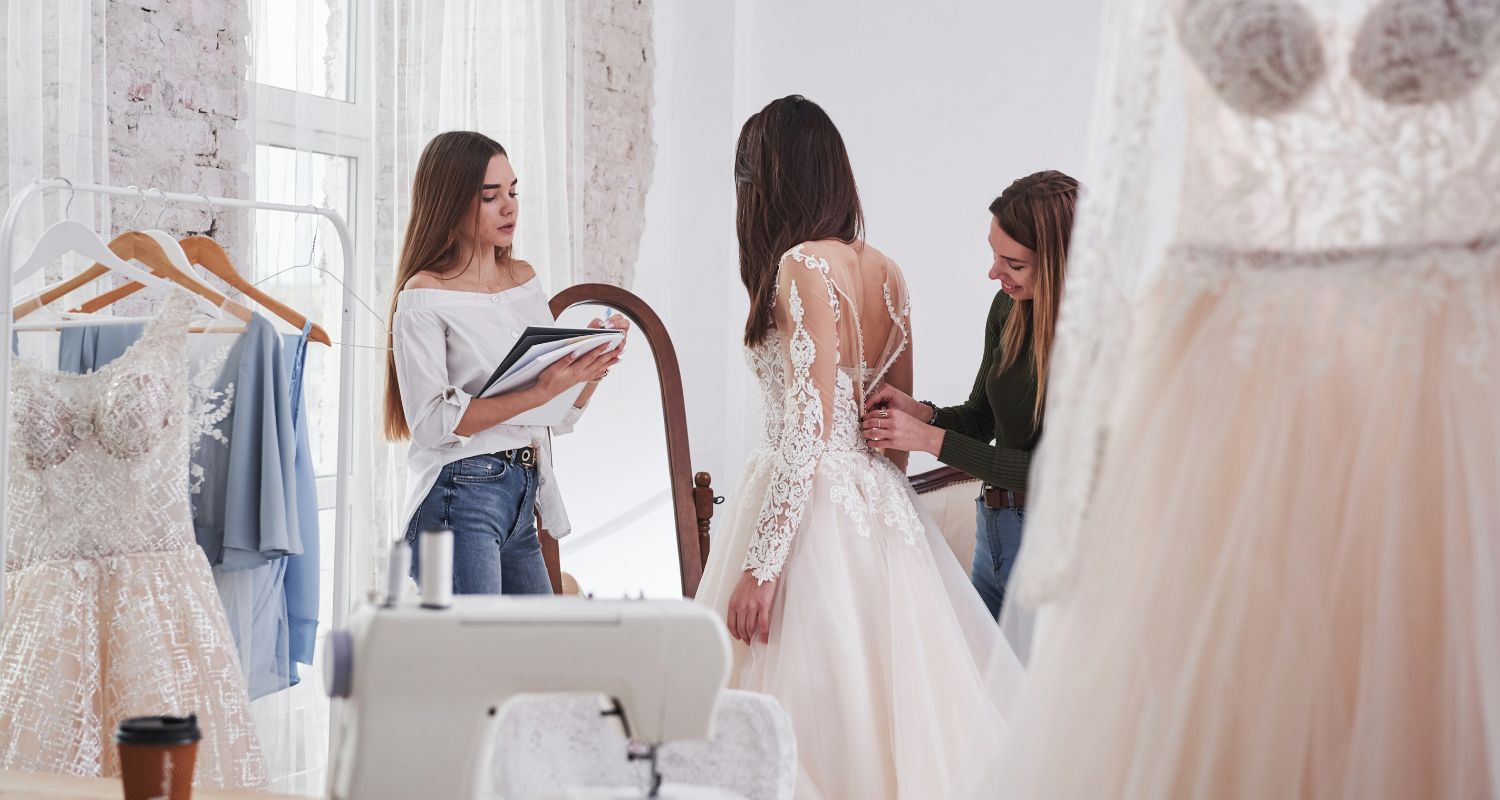
The first appointment lays the foundation for the entire alteration process. Your seamstress will carefully assess how the gown fits and determine which areas need to be adjusted.
During your first fitting, your seamstress may:
- Evaluate the fit around your bust, waist, hips, shoulders, and back.
- Pin sections that need to be taken in or let out.
- Measure the correct dress length based on your shoes.
- Discuss your preferred silhouette and overall comfort.
- Review any custom requests, including neckline changes, sleeve adjustments, or additional support.
To achieve the most accurate results, wear the shoes, undergarments, shapewear, and accessories you plan to use on your wedding day. Even a slight difference in heel height can change the ideal hem length.
Second Fitting
By your second appointment, many of the planned alterations will already be complete. This fitting is designed to evaluate the updated fit and identify any final refinements before the dress is finished.
Your seamstress may adjust:
- The bodice for a closer or more relaxed fit.
- The hem for the perfect length.
- Shoulder straps or sleeves for improved comfort.
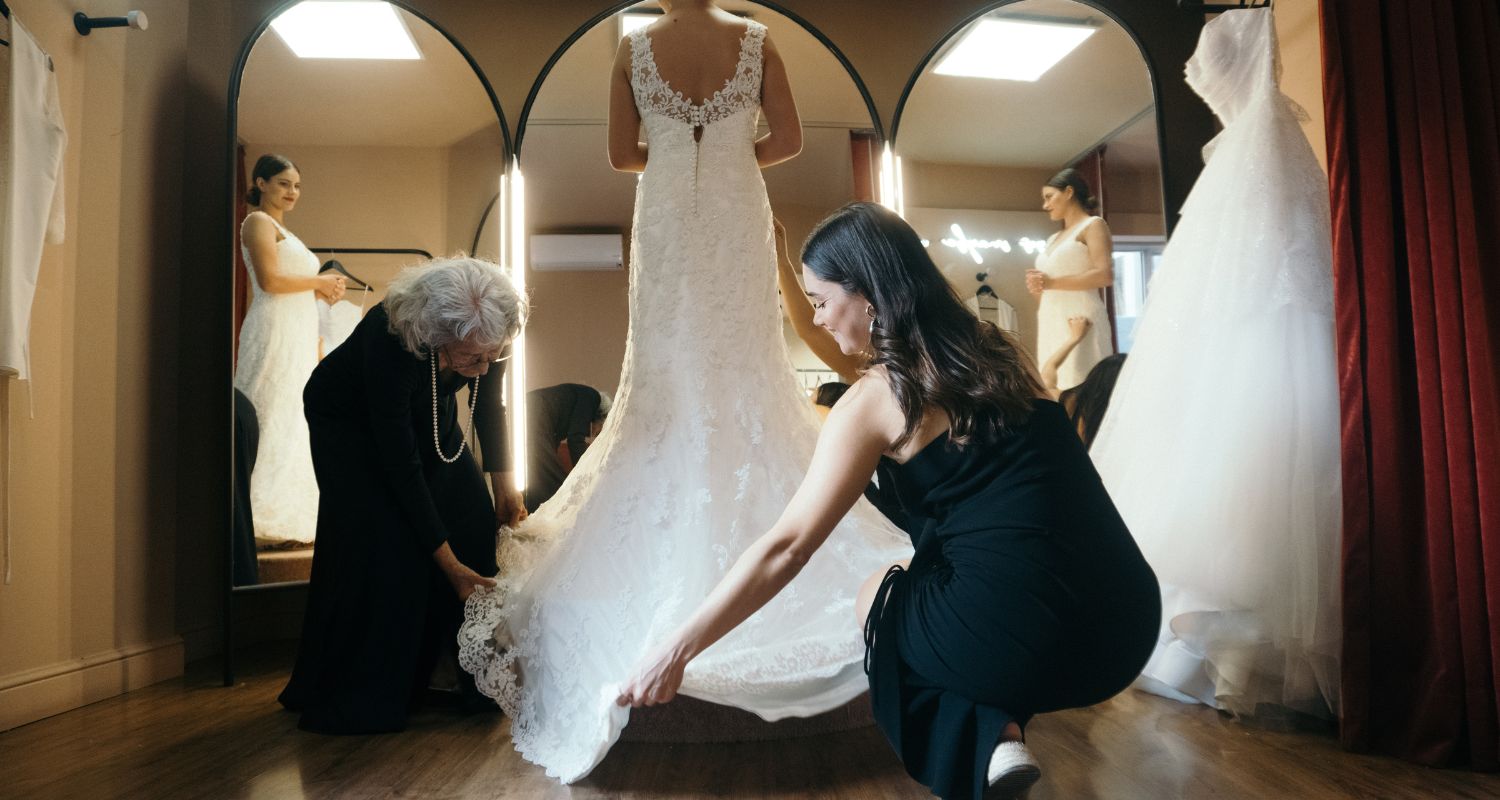
- The bustle for easier movement after the ceremony.
- The waist, hips, or bust to create a smoother silhouette.
During this appointment, take time to walk, sit, turn, and raise your arms. These movements help confirm that the dress remains comfortable throughout every part of your wedding day.
Final Fitting
Your last fitting is the final opportunity to make sure everything fits exactly as expected before the wedding.
During this appointment, your seamstress will:
- Confirm that all alterations have been completed successfully.
- Demonstrate how your bustle should be secured.
- Show you the most comfortable ways to walk, sit, and move while wearing the gown.
- Share recommendations for transporting and storing the dress.
- Explain how to keep your gown clean before the ceremony.
If a family member or bridesmaid will help bustle your train after the ceremony, invite them to this appointment so they can learn the process firsthand.
Tips for a Smooth Alteration Experience
- Schedule your first fitting as soon as your dress arrives.
- Wear the same shoes to every appointment.
- Bring your wedding undergarments and shapewear each time.
- Try to maintain a consistent weight after alterations begin.
- Allow additional time for gowns with intricate details.
- Speak up if something feels too tight or uncomfortable.
- Bring someone who can learn how to bustle your train.
FAQs
How many fittings does a wedding dress usually need?
Most brides need two to three fittings. Complex alterations or custom changes may require additional appointments.
How far in advance should I book my alterations?
Book your first alteration appointment 8 to 12 weeks before your wedding. During peak wedding season, scheduling even earlier is a good idea.
Should I bring my wedding shoes to every fitting?
Yes. Your shoe height affects the dress length. Wearing the correct shoes helps your seamstress hem the gown accurately.
Can my dress be altered if I lose or gain weight?
Yes, many dresses can be adjusted within a reasonable range. Tell your seamstress about any expected changes before alterations begin.
How long do wedding dress alterations take?
Most alteration schedules take 6 to 8 weeks from the first fitting to the final pickup. The timeline depends on the complexity of the changes and your seamstress’s schedule.
The Perfect Fit Starts with Good Planning
Your wedding dress should feel just as comfortable as it looks beautiful. Beginning alterations early gives your seamstress the time needed to create a fit that feels natural, supports your movement, and reflects your personal style. By planning ahead and attending each fitting, you’ll spend less time worrying about your gown and more time enjoying every moment of your celebration.
Need help planning your Northern Colorado wedding? Getting support from a single, experienced team for photography, videography, DJ services, photo booth, or day-of coordination can make planning and executing your wedding much smoother and more effortless.