Wedding Reception Sound Design: Beyond Music in Sioux City
When couples plan a wedding reception in Sioux City, the conversation almost always starts with music.
What songs will get people dancing?
What should we play for our first dance?
How do we keep the energy up all night?
Those are all important questions, but they only cover part of what your reception actually sounds like.
A wedding reception is not just a playlist. It is a full environment where people are constantly moving between moments. Arriving, talking, eating, reacting, and eventually celebrating together on the dance floor.
Sound design is how all of those pieces are managed so the night feels connected instead of scattered.
It is what keeps a reception from feeling like a series of separate events and turns it into one continuous experience.
What Sound Design Looks Like in a Sioux City Wedding
Sound design is about intentional decisions.
What guests hear when they walk into a venue like Marriott Riverfront Event Center.
How speeches come through clearly in a larger space like Sioux City Convention Center.
How the night builds from dinner into a full dance floor.
We worked a Sioux City wedding where the couple said they wanted the night to feel smooth and relaxed, not rushed or overly structured.
To make that happen, every phase had to be thought through ahead of time.
Guests entered the room with music already playing at a comfortable level. When dinner started, the volume adjusted so people could talk easily. When speeches began, the room was brought in clearly so guests knew to focus.
Nothing felt dramatic, but everything connected.
The First Phase of the Reception Sets the Tone
The beginning of your reception shapes how guests engage for the rest of the night.
If people walk into a quiet or unstructured space, they tend to hold back. Conversations stay limited, and the room takes longer to feel active.
We have seen this at receptions where there is no consistent sound when guests arrive. People linger near the bar or stay in small groups because there is nothing pulling the room together.
At another Sioux City wedding, the approach was more intentional.
As guests entered, there was already a steady background of familiar music. Not loud enough to interrupt conversation, but strong enough to create a shared atmosphere.
Within minutes, people were talking, moving around, and settling in. The room felt connected early instead of needing time to catch up.
That early setup makes everything that follows easier.
Audio Clarity Impacts Engagement
One of the fastest ways to lose a room is poor audio.
If guests cannot clearly hear what is happening, they stop paying attention.
We worked a Sioux City wedding where the speeches had strong content, but the microphone setup was inconsistent early on. Guests tried to stay engaged, but conversations started at tables because it was difficult to follow along.
At another reception, the audio was clean from the beginning.
When the first speaker started, the room naturally quieted. Guests stayed focused without being asked multiple times. Reactions carried across the space, and the moment felt unified.
The difference came down to clarity.
Sound design ensures that key moments are delivered in a way that holds attention instead of competing with the environment.
The Transition From Dinner to Dancing Is Where Momentum Is Decided
Once dinner ends, the energy of the room needs to shift.
Guests have been sitting and talking for an extended period of time. They are comfortable, but that comfort makes it harder to get people moving.
If there is no clear transition, people stay in that same state. Some head to the bar, others continue conversations, and the dance floor opens slowly without much energy.
We have seen this happen at Sioux City receptions where dinner wrapped up and there was no defined next step. The music stayed the same, there was a gap between formalities, and the room never fully re-engaged at once.
At a different wedding at the Marriott Riverfront, the transition was structured.
Toward the end of dinner, the music began to shift slightly. The tempo increased just enough to signal that something was changing.
When the couple moved into their first dance, the room was already paying attention. There was no need to pull guests in from scattered conversations.
The key detail came immediately after. There was no pause. The next song started right away, and it was something familiar enough that guests responded quickly.
That sequence created a clear path from sitting to participating.
Once the first group stepped onto the dance floor, the rest followed.
Momentum Needs to Be Managed Throughout the Night
A strong start to the dance floor does not guarantee it will stay that way. It just means you got people there once.
Momentum has to be maintained, and that comes down to reading the room in real time, not just playing through a preset list.
We had a wedding at the Sioux City Convention Center, where the dance floor opened well but began to level off after some time. You could feel the energy starting to plateau, not gone, but close.
Instead of waiting for it to fully drop, the DJ adjusted early. The pacing changed, different songs were introduced, and the energy was redirected before it faded. Transitions tightened, and the flow picked back up.
That kept guests engaged without needing to restart the entire room.
Sound design is about managing those shifts as they happen, staying one step ahead so the energy never fully dips.
The DJ’s Role Is to Manage the Room
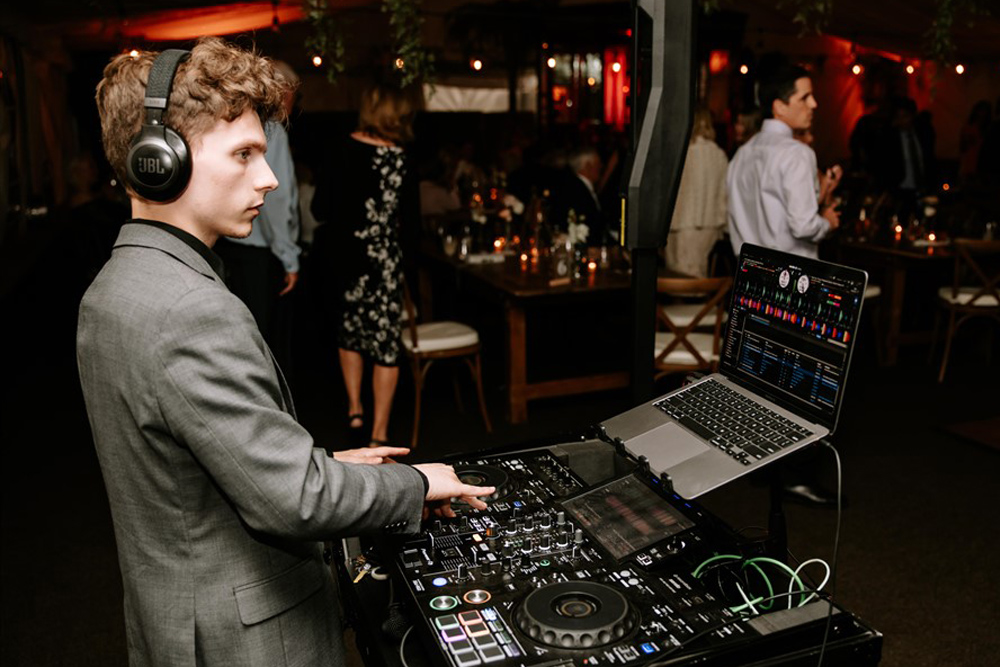
A professional wedding DJ is responsible for more than just playing music.
They are controlling how the night moves.
They adjust volume based on the room.
They time announcements so they do not interrupt momentum.
They watch how guests respond and make changes accordingly.
At one wedding at Country Celebrations, there was a moment where the energy on the dance floor dipped slightly.
The DJ shifted direction early, before most guests noticed the change. That adjustment kept people engaged and prevented the floor from clearing out.
Those small decisions shape the overall experience more than any single song choice.
How the Full Team Supports the Experience
Sound design works best when it is supported by the entire vendor team.
Your timeline needs to allow for smooth transitions.
Your coordinator needs to keep events moving at the right pace.
Your photographer and videographer need to be ready for key moments.
At Complete Weddings + Events Sioux City, those pieces are aligned.
The DJ is not operating independently. The team works together to keep the night connected from start to finish.
That coordination removes gaps and keeps guests engaged throughout the reception.
Why This Matters
When couples look back on their wedding, they usually describe how the night felt overall.
They notice whether things flowed smoothly or felt disjointed.
They remember whether guests stayed engaged or drifted in and out.
They recognize whether the energy carried through the entire reception.
Those outcomes are shaped by how well the event was structured from a sound and flow perspective.
Sound design is not something guests will call out directly, but it is something they experience the entire time they are in the room.
Complete Weddings + Events – Sioux City Wedding DJs, Photo Booth Rentals & more!
At Complete Weddings + Events Sioux City, we offer more than just photography—we’ve got videography, DJ, photo booth, and coordination covered, too. Our team of professionals works seamlessly to capture every big moment and all the in-between ones.
Contact us today to learn more about our wedding services bundle packages!